
| THE WILMA NETWORK IN AFRICA | |
WILMA's Network in Africa, shown in the diagram below, is led by WILMA's National Managing Partners (NMPs), which are headquartered in the capitals of the African countries where WILMA is operating. NMPs, which are nonprofit organizations seeking to help WILMA build capacities for leadership and management for development, have contracts with WILMA headquarters (Washington D.C.) to provide specified management services to ground-level parts of the Network.
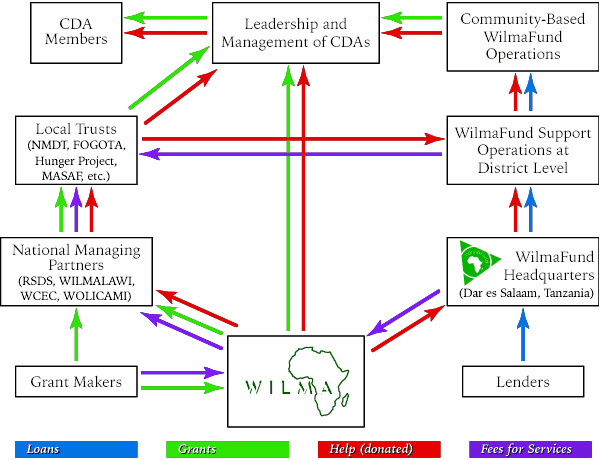
Currently there are four NMPs in Kenya, Malawi, Tanzania, and Uganda. Their individual objectives are described below. At the ground level of developmental leadership, Community Development Associations (CDAs) are WILMA-certified membership organizations intended to become the beneficiaries of the WILMA Network in Africa. Figure 1 suggests how a combination of loans, grants, fees for service, and donated help build an integrated network of capacities in leadership and management to help the able poor, working in various types of communities, to climb out of poverty and join the growing African middle class. Trusts that organize grassroots groups for self-help, operating at district level and below, are also vital parts of this Network, providing local knowledge, organizing skills, and contacts with local patrons, experts, and officials.
Complementing these organizations are WilmaFund (WILMA's Holding Company in Africa) and its network of CDA-hosted business operations (the right-hand side of Figure 1). WilmaFund manages a growing portfolio of loans to small businesses that are community-based and community-driven-and, ultimately (to the extent that WILMA succeeds), community-owned.
WilmaFund
WILMA's financing arm in Africa is WilmaFund, a holding company registered in Tanzania. WilmaFund borrows long-term capital from investors internationally and channels funds to its Subsidiary companies in ways that take into account their management constraints and limited debt service capacity. These companies as well as their hosting CDAs are nurtured and facilitated by the NMPs and (where feasible) district trusts that help to provide local support.
The WilmaFund Subsidiaries are new, registered ventures that WilmaFund believes will be commercially successful and also will contribute substantially to the permanent transformation of the CDAs, thus fulfilling the objectives of their NMPs and the WILMA Network as a whole. The ventures are all community-based and community-driven, but the locations of their various functions (primary production, processing, marketing, advocacy) depend on transport costs, logistics, and the requirements of vertical integration to achieve empowerment of the primary producer. Thus, as Figure 1 indicates, WilmaFund invests in supporting operations in urban areas, as well as operations located within rural (primary producing) communities.
The control of the Subsidiary companies (given the potentially-conflicting agendas of investors, consumers, managers, and protagonists of social change) is a central concern of the whole Network. How WILMA is dealing with this issue is discussed at length in the WilmaFund Business Plan. One of the requirements is able governance of WilmaFund itself: a representative board of directors who can make good policies and rules for the resolution of conflicting objectives in ways that protect investors' interests.
Directors of WilmaFund
WilmaFund has a strong and dedicated board of directors, composed of leaders of the NMPs, leaders of governments, NGOs, and business, and officers of WILMA. They are: